
This article speaks to all those who are foreign to construction and its implications; to anyone who might be new to the process and is looking for a breakdown of how it all goes down. In this article, I go over this topic in a way that I wish I had it explained to me, using my experience as a civil engineer, builder and project admin.
The first thing we want to know at the end of the site investigation stage is: is what we have in mind feasible in the first place?
If the answer is yes, then we must first define two key variables from the get-go: cost and time. Let me illustrate with a couple of examples.
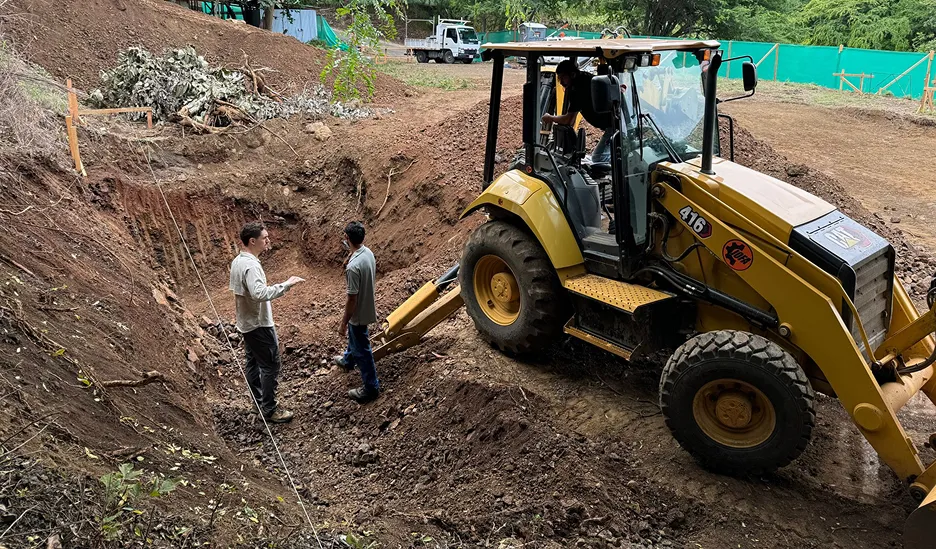
Example 1:
Regardless of the site’s location, we must first request an investigation of the power availability surrounding the area from the electrical company. This is due to, mostly, us making sure that not only are we equipped with the adequate energy resource to carry out our project, but that in case we aren’t, the electrical company will request back to us to install a power transformer in order to be granted electrical service in the first place.
If this were the case, this expense falls on our client’s wallet. This case specifically, cost us 3 months’ worth of our time. During this time, the company installed an electrical post in front of the property, the transformer itself and the whole ordeal set us back $5500.
In hindsight, it’s better to know these kinds of details before the fact. Once again: cost and time.
Example 2:
Another key investigation of the construction site is how the soil deals with water flowing and seeping into the ground. We want to study the permeability, or rather, absorption rate of the ground and its capacity to deal with fluid infiltrations. In this case we’d like to see if a conventional septic tank and its consequent draining system does the trick, given that the ground yields favorable results.
Let’s say our study finds that the ground doesn’t present favorable absorption properties. In this case, we can’t use the conventional solution I just mentioned, but rather, we require a waste water treatment plant type of system. You can already guess that, just like in example 1, this is a solution that costs more and will set us back a set amount of time and money during the design and construction phase of our project.
These are just a handful of real-life examples that showcase the importance of the site investigation stage and what to expect of it.